
The weave
Rattan & cane furniture, woven in our own workshop.
Cane work is a craft of its own, and we've kept it in-house for three decades. Our weavers stretch natural cane and rattan over solid hardwood frames — chairs that breathe in Ghana's heat, headboards that filter the light, wardrobe fronts that let clothes air.
Woven pieces
Cane & rattan in the collection
Every woven piece pairs natural cane with kiln-dried hardwood — never plastic wicker over pine.
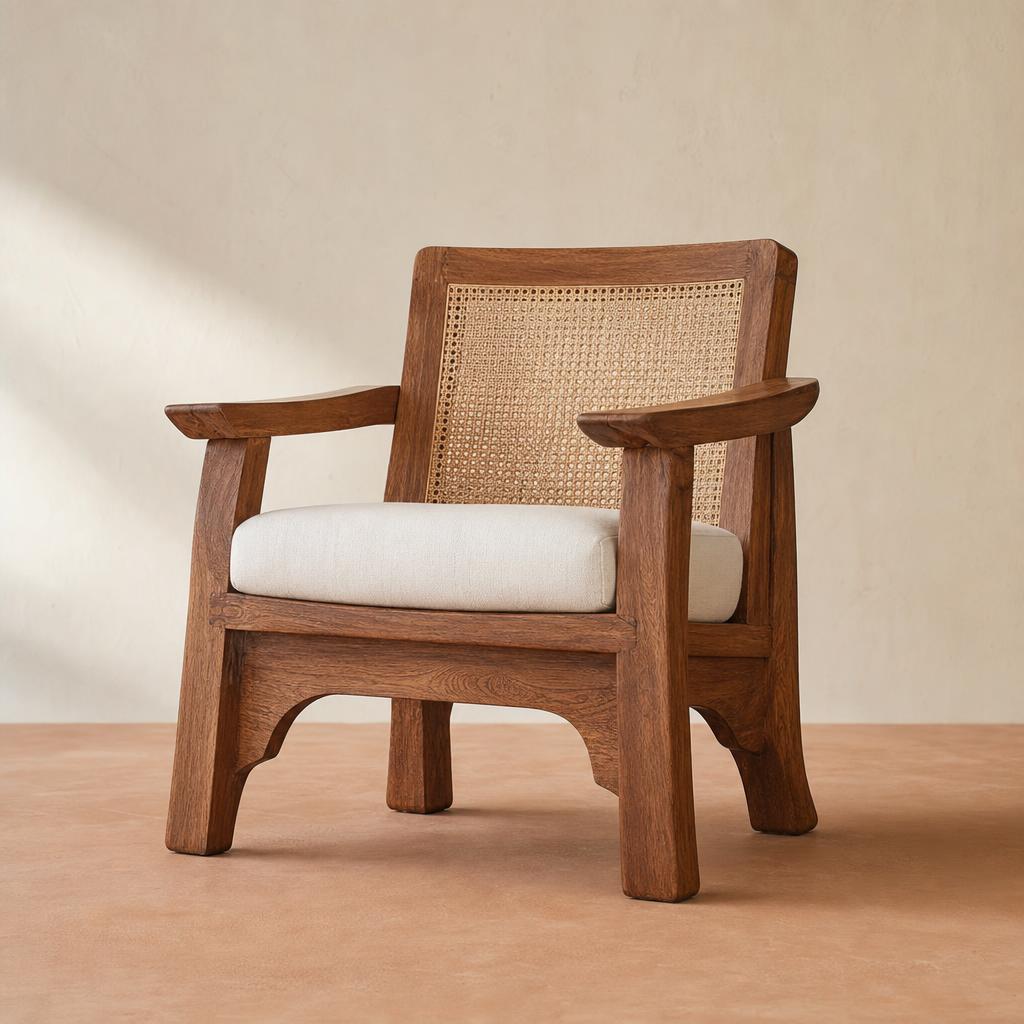
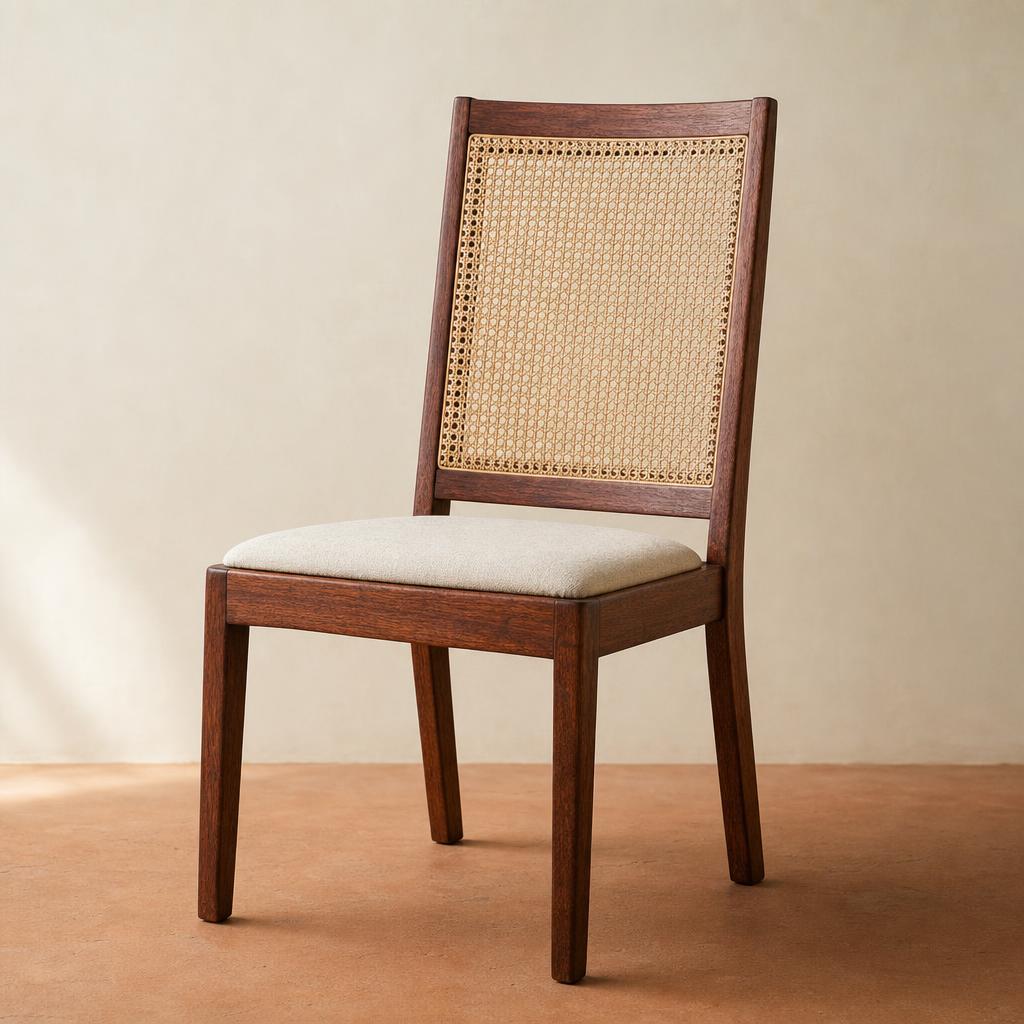
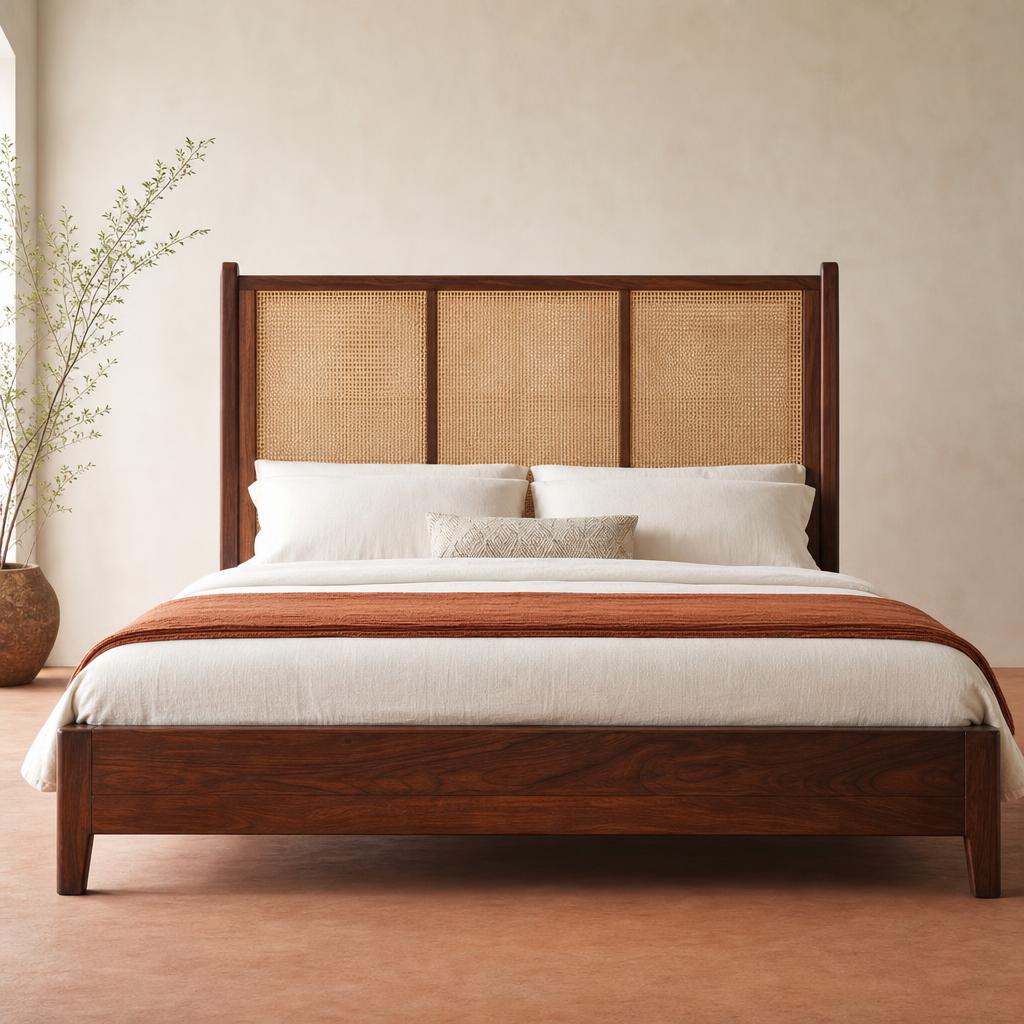
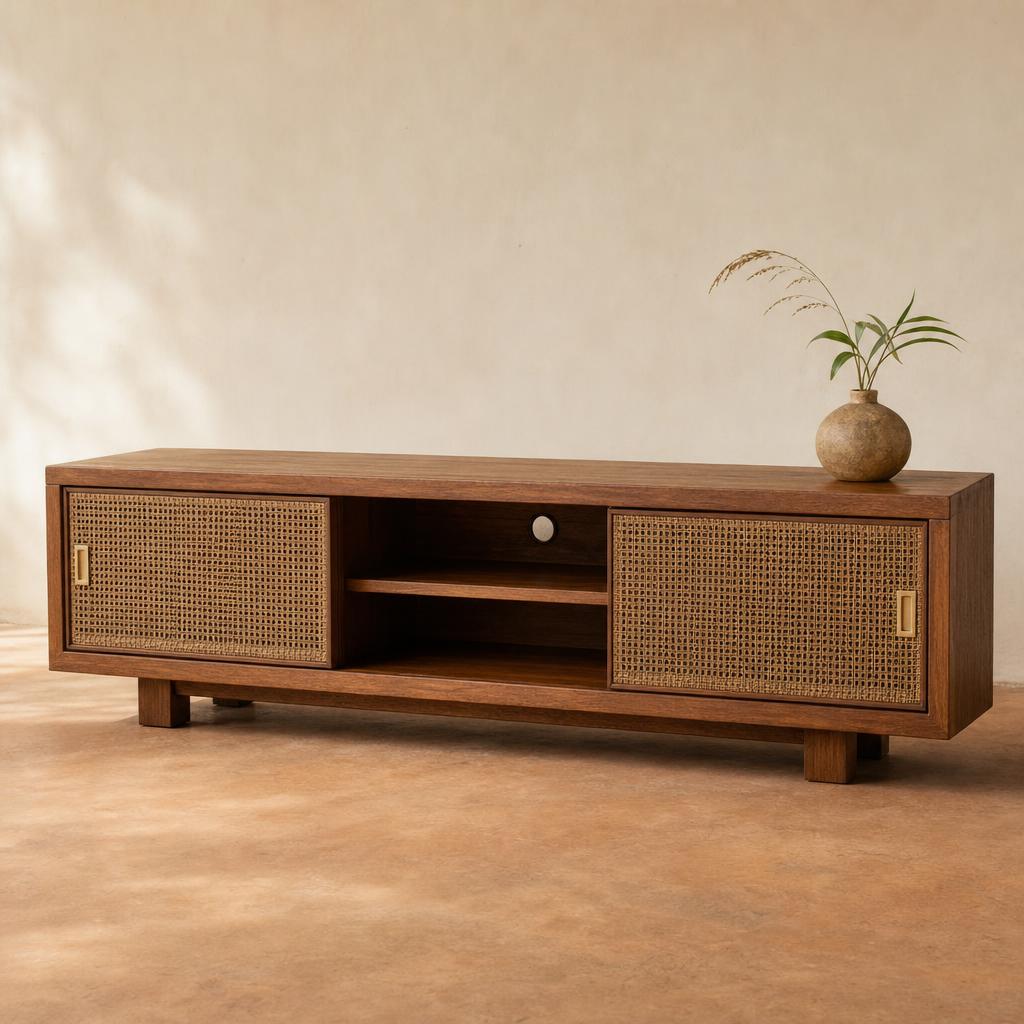
Also woven: the Jamestown bar stool, the Kumasi wardrobe with cane door panels, and any custom cane furniture you can sketch.
Why cane works in Ghana
A material made for this climate
Woven cane furniture isn't just beautiful — it's practical here. Cane breathes, so seats stay cool in the heat; it flexes, so it's comfortable without foam; and it's light, so pieces move easily. Our weave (sometimes called cannage) is stretched taut over frames of odum, teak or mahogany and can be re-woven decades later — we still re-cane chairs we built in the 2000s.
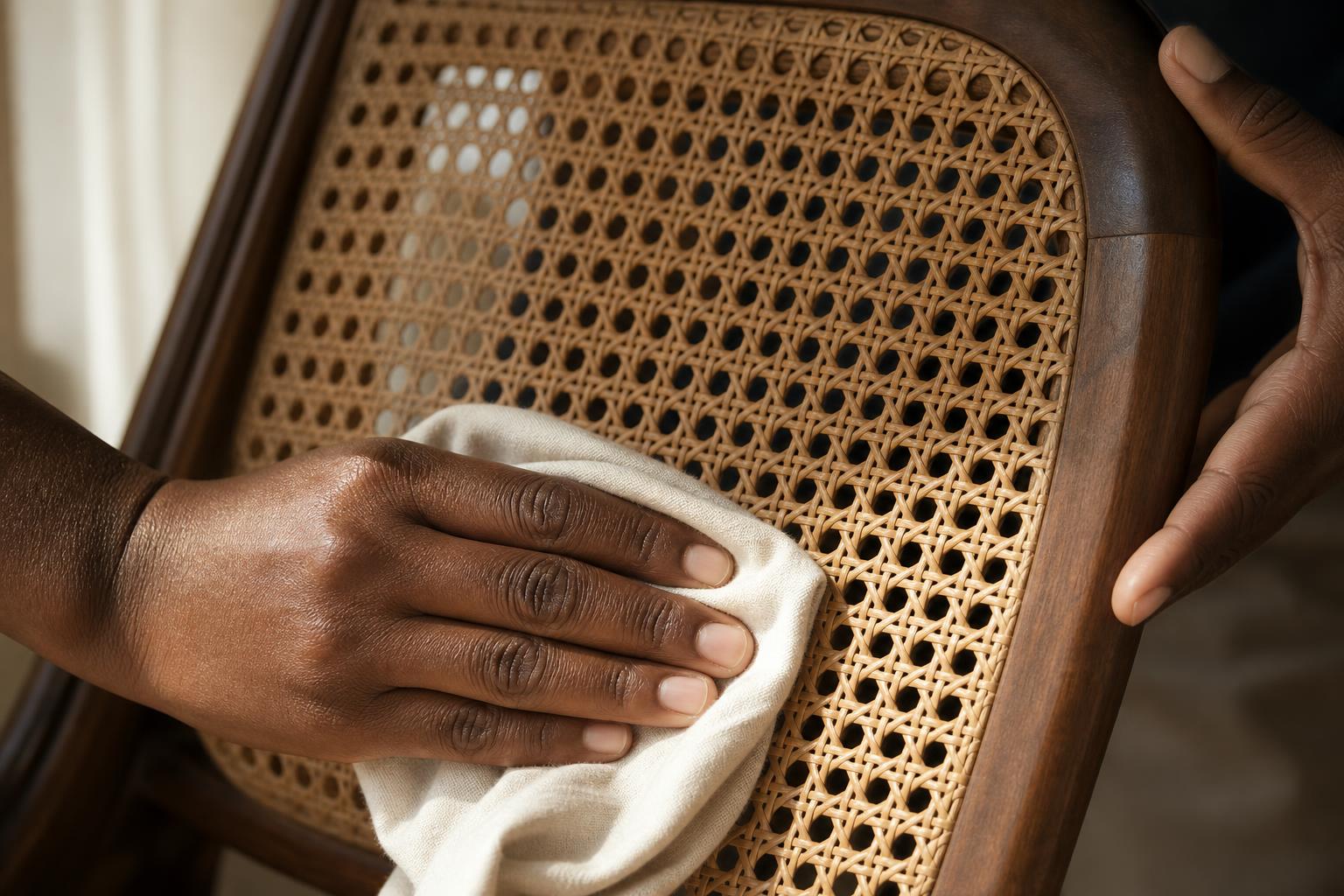
Caring for it is simple: dust it, wipe it with a barely-damp cloth, keep it out of constant direct sun. Full guide: how to care for rattan and cane furniture.
Questions
Rattan & cane — FAQs
How much is a rattan chair in Ghana?
Our handwoven cane dining chairs start from GH₵ 2,400 and cane-back accent chairs from GH₵ 5,800 — every one on a solid hardwood frame, woven in-house in Accra.
Is rattan furniture durable?
Quality cane over a solid hardwood frame lasts decades indoors — and unlike foam or fabric, a worn weave can simply be re-woven. We still re-cane chairs we built twenty years ago.
Do you make custom cane furniture?
Yes — cane panels can be woven into almost any commission: wardrobe fronts, headboards, cabinet doors, room dividers. See our custom furniture service.